House of Patterns
| Location | Rajapalayam |
| Typology | Residential |
| Year | 2025 |
| Status | Built |
| Built up area | 46,000 Sqft |
| Client | Mr Prabaharan |
| Structural | Shanmugam Associates |
| Contractor | to be disclosed |
| Consultants | DNR [Electrical],DND [Plumbing] |
| Photography | Denis Amirtharaj |
| Lead Architects | Raja Krishnan, Santhosh Shanmugam, Ramya Raman |
| Design Team | Prasath |
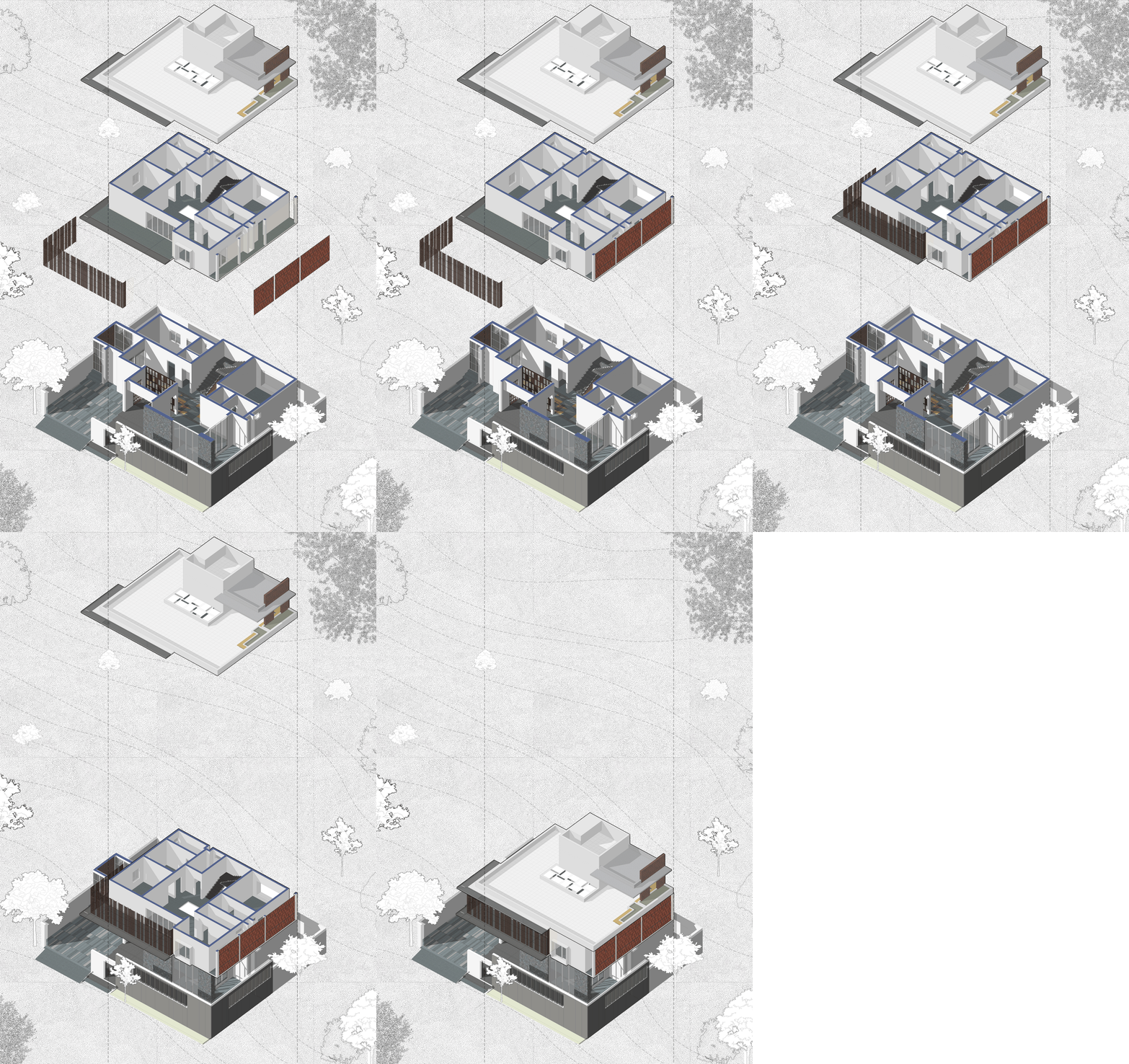
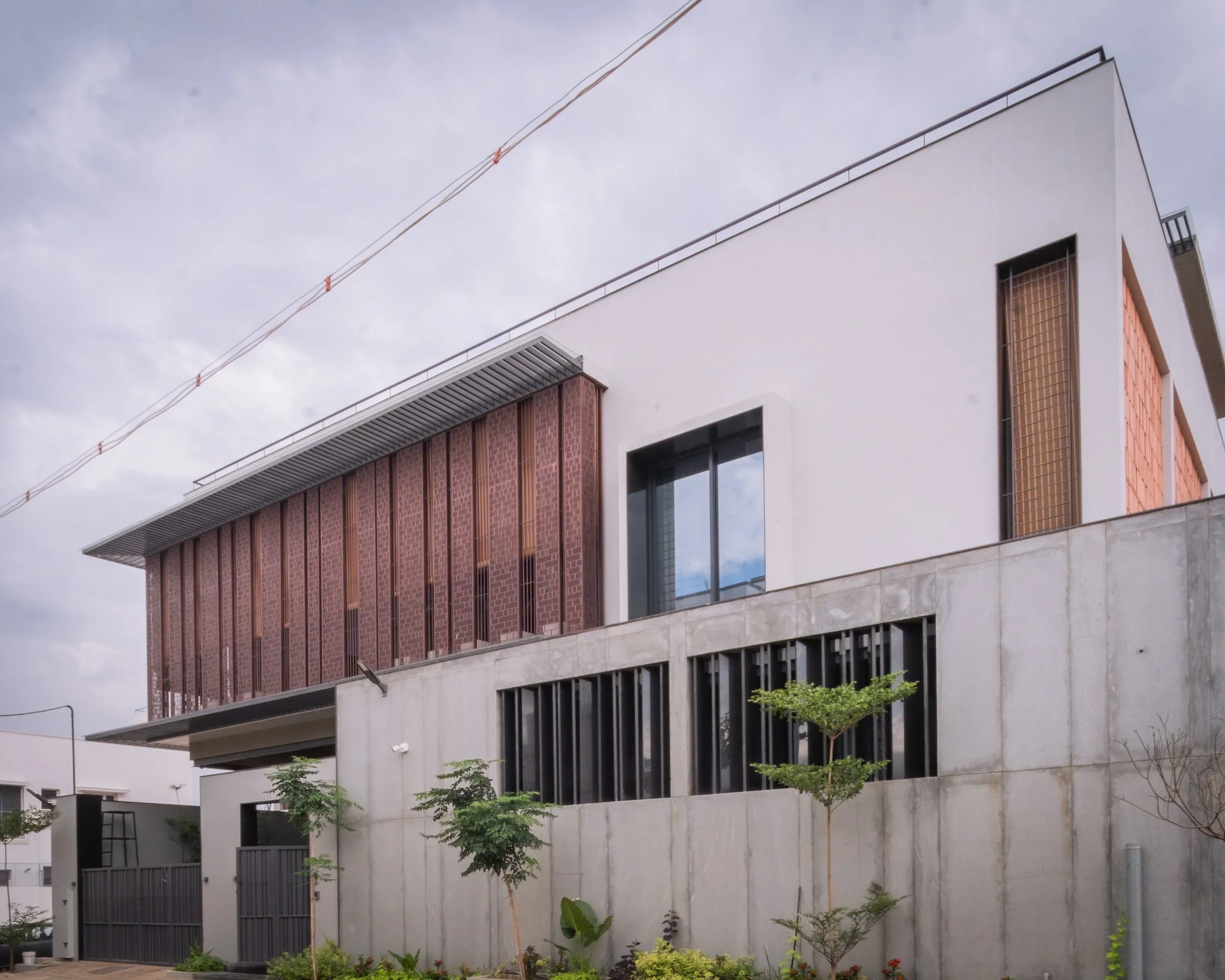
Located in the serene town of Rajapalayam, with views towards the Sanjeevi Hills, the project is set within a compact site area of 3,700 sq.Ft. Conceived as a ground-plus-one dwelling, the home accommodates a living, dining, kitchen, four bedrooms, and a dedicated media room—carefully orchestrated to balance functionality with experiential richness.
In a region defined by intense sunlight and a warm climate, we sought to use these very forces as design tools—allowing light, shadow, and material to shape the character of the home. From the outset, the idea of pattern emerged not as an applied motif, but as a spatial and atmospheric generator. We envisioned patterns that are not merely seen but experienced formed through the interaction of light with layered surfaces, textures, and volumes.
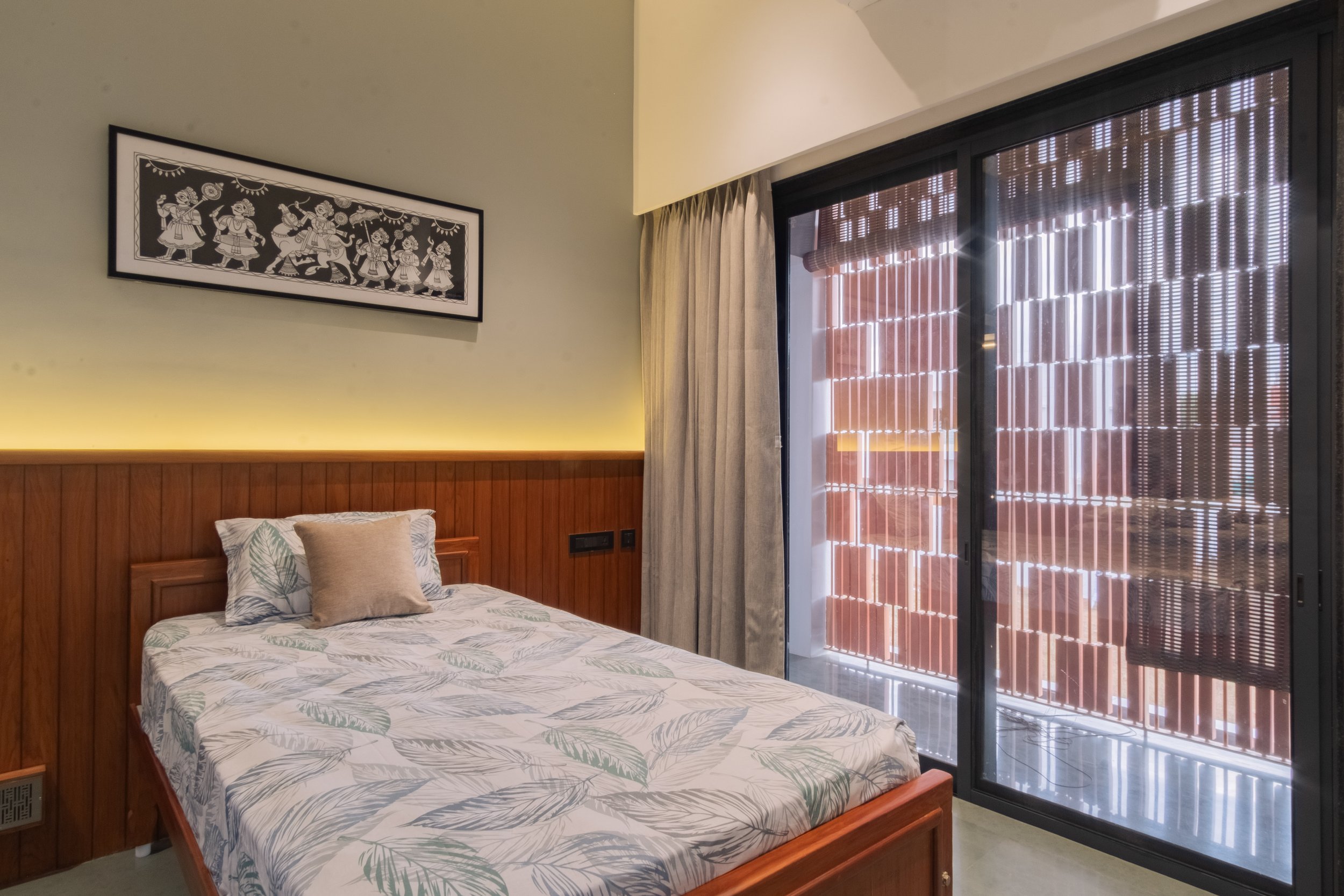
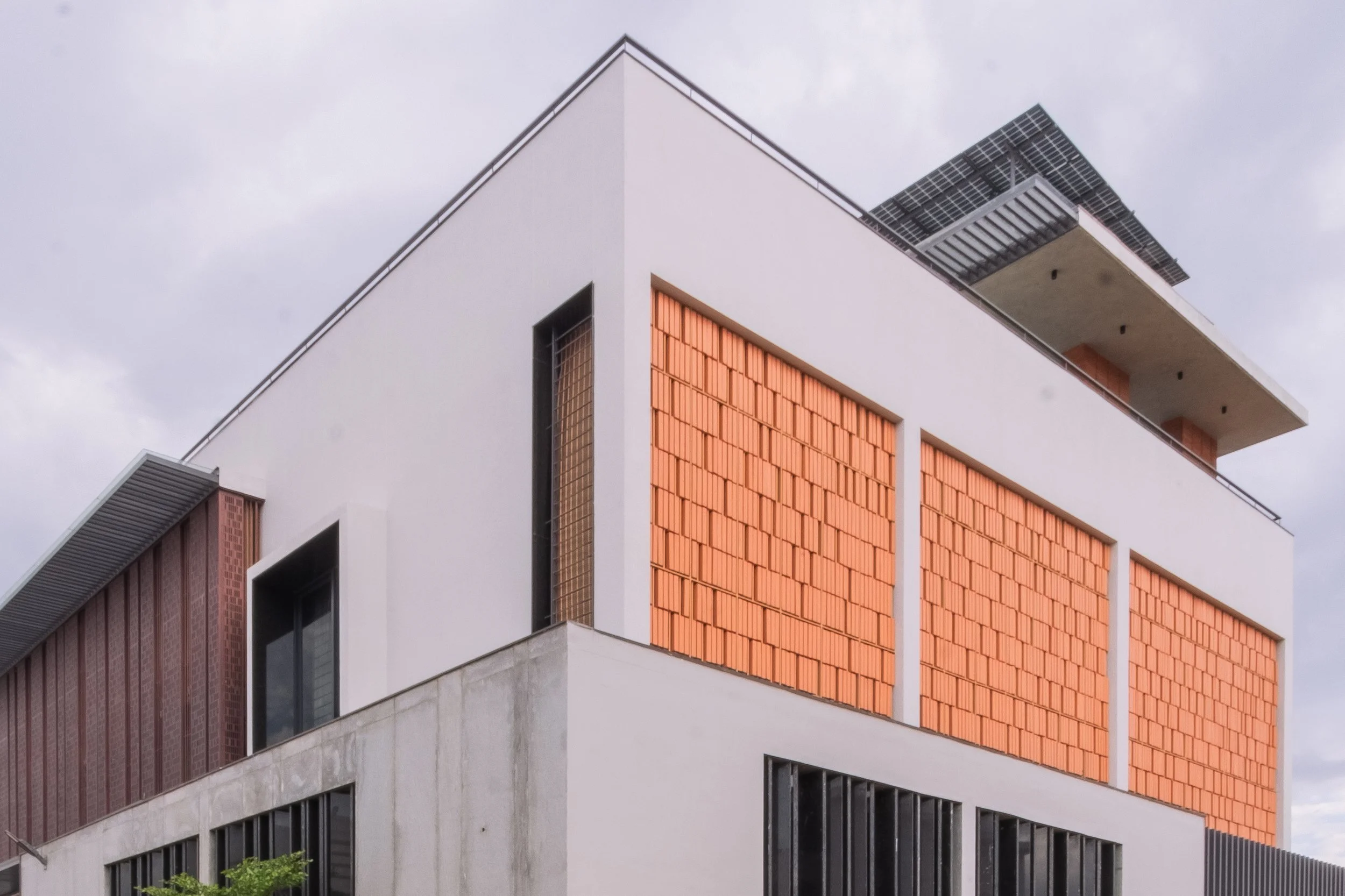
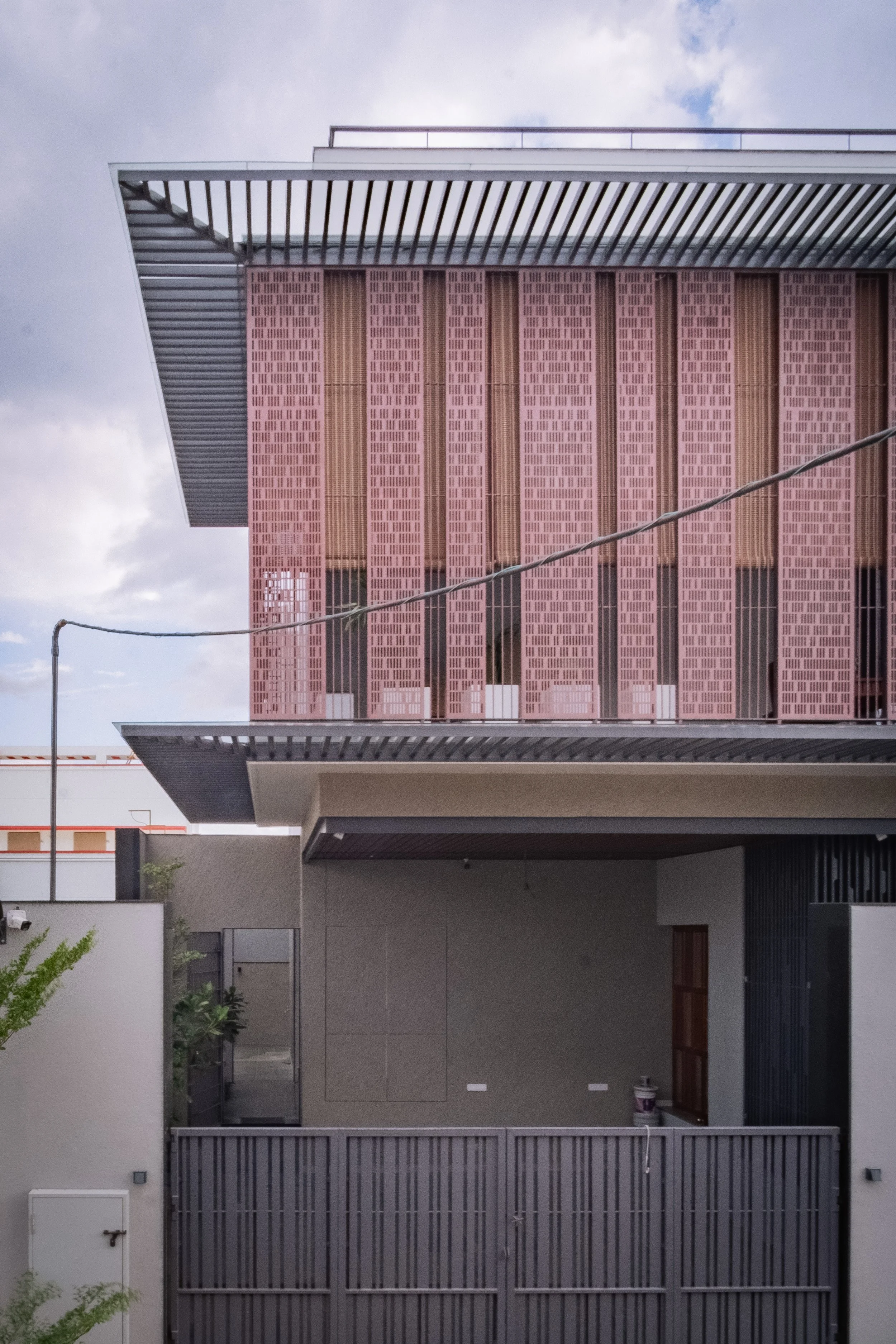
One of the primary responses to the site was the treatment of the west-facing facade. To mitigate heat gain while preserving openness, a terracotta Jaali screen was introduced along the first floor. This layer acts as both a climatic buffer and a visual filter—tempering the harsh western sun while allowing air and diffused light to pass through. As the day progresses, the Jaali casts shifting shadows across the interiors, creating a constantly evolving canvas of light.
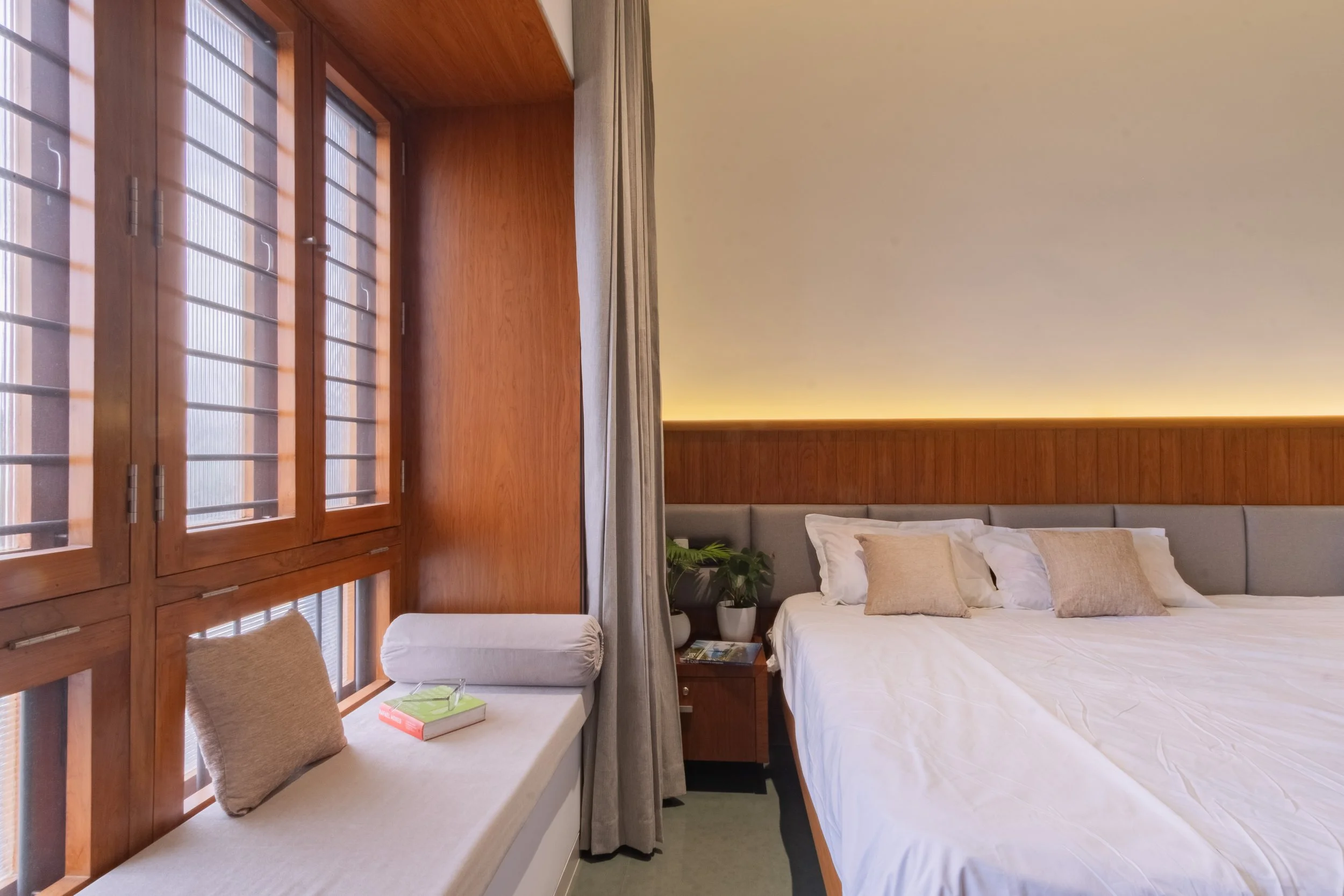
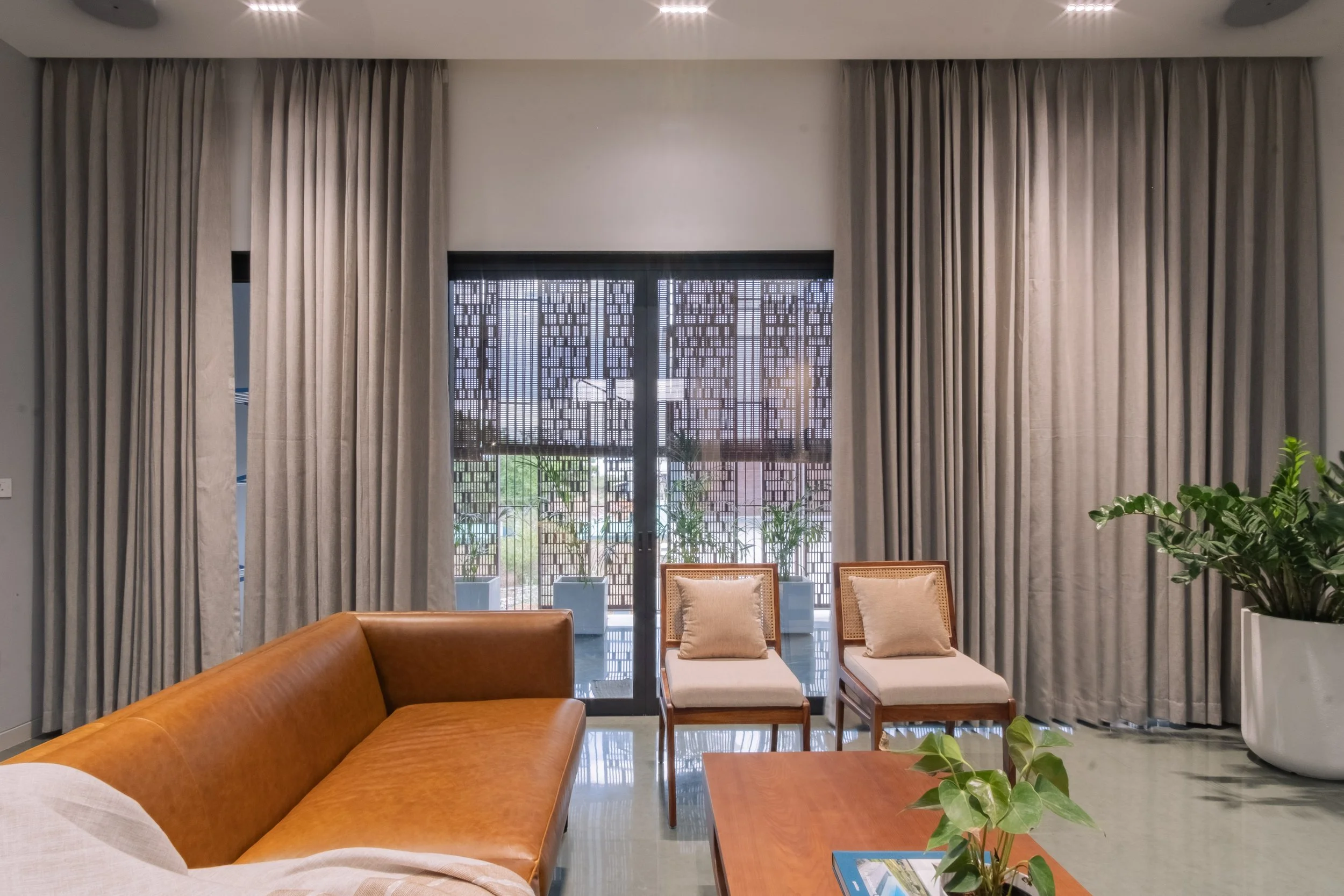
The balcony frontage offers a lighter, more contemporary interpretation of this idea. Perforated metal sheets provide safety and privacy while maintaining visual permeability. These screens further enrich the interior atmosphere by allowing dappled light to filter through, reinforcing the dynamic interplay of light and shadow that defines the house.
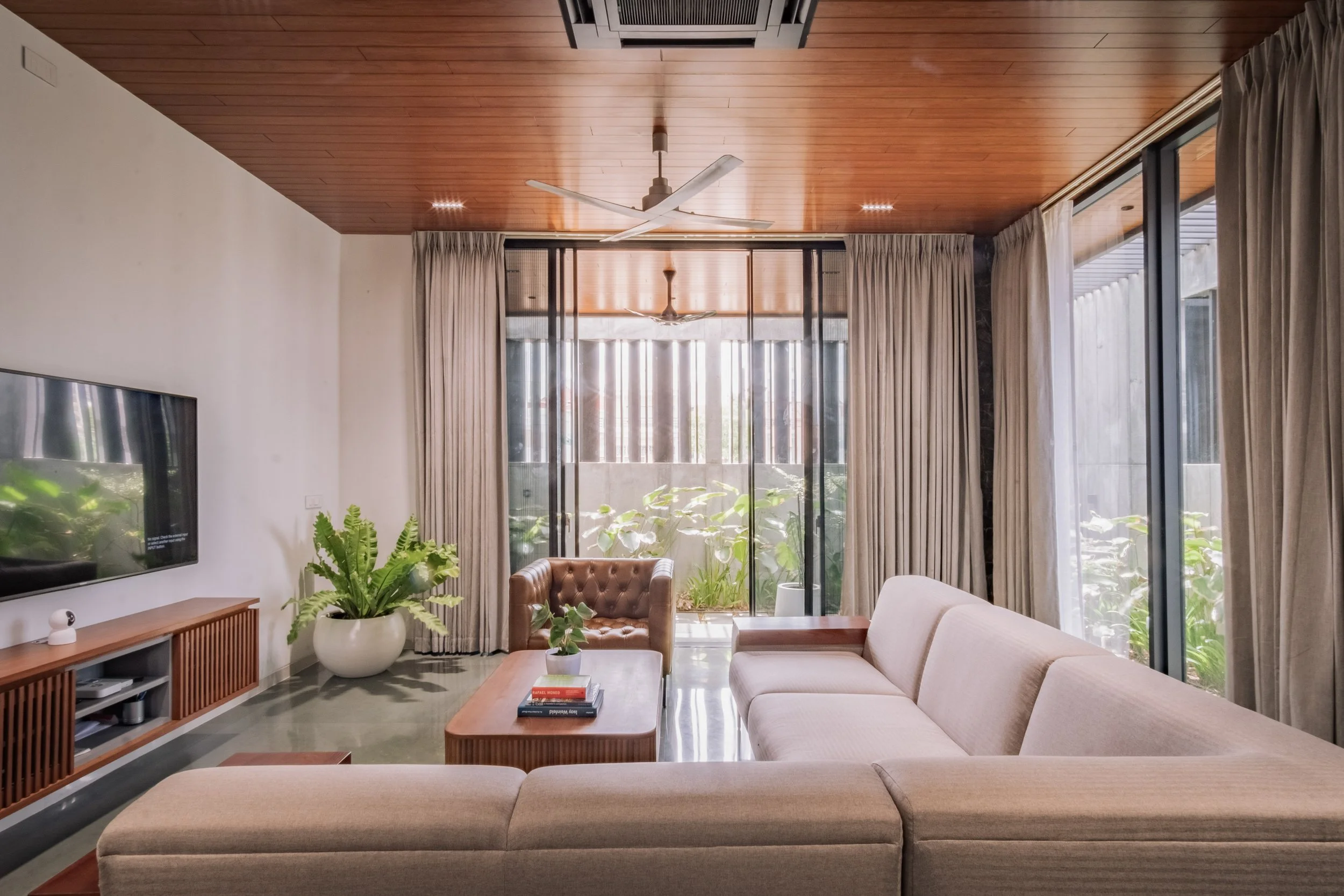
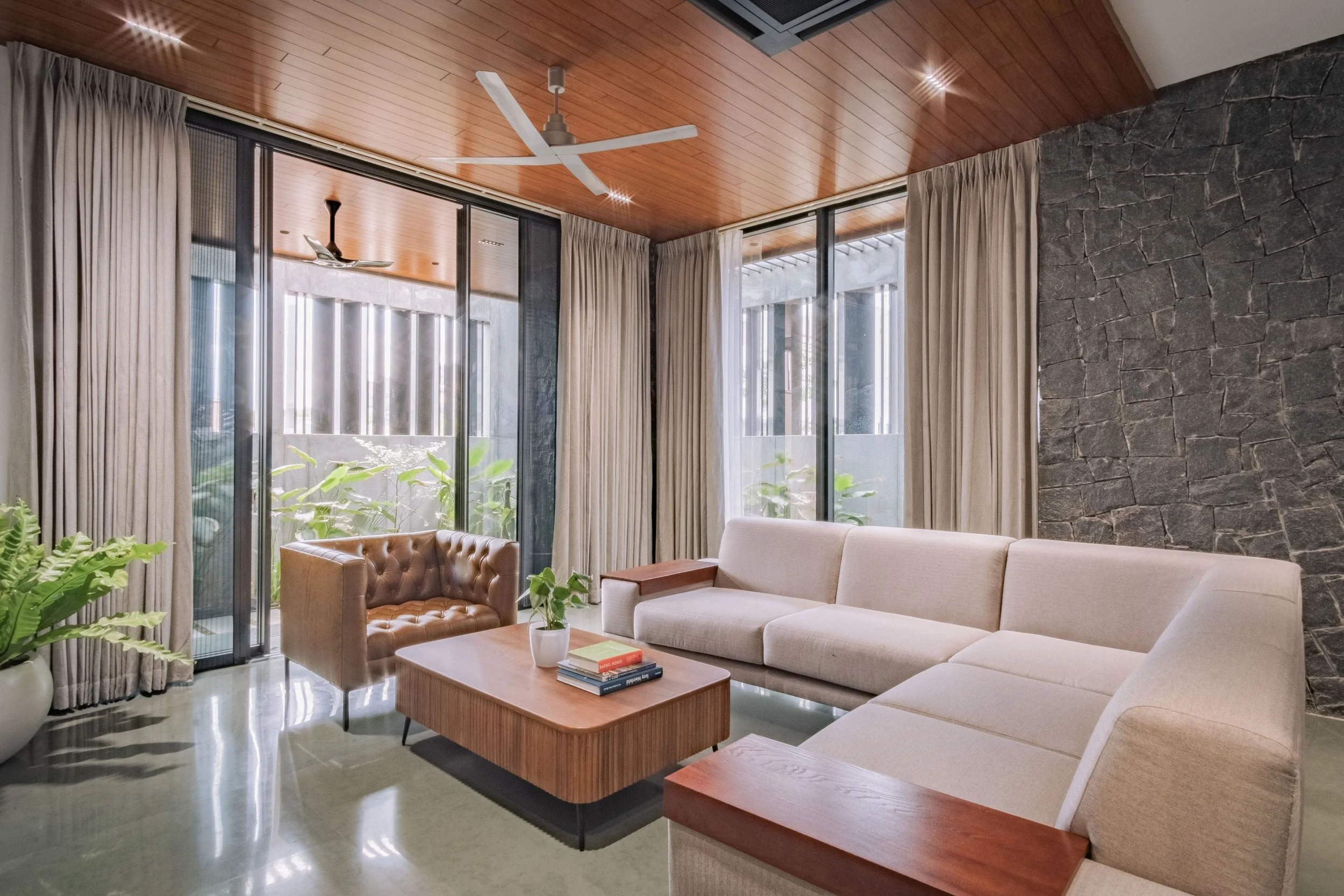
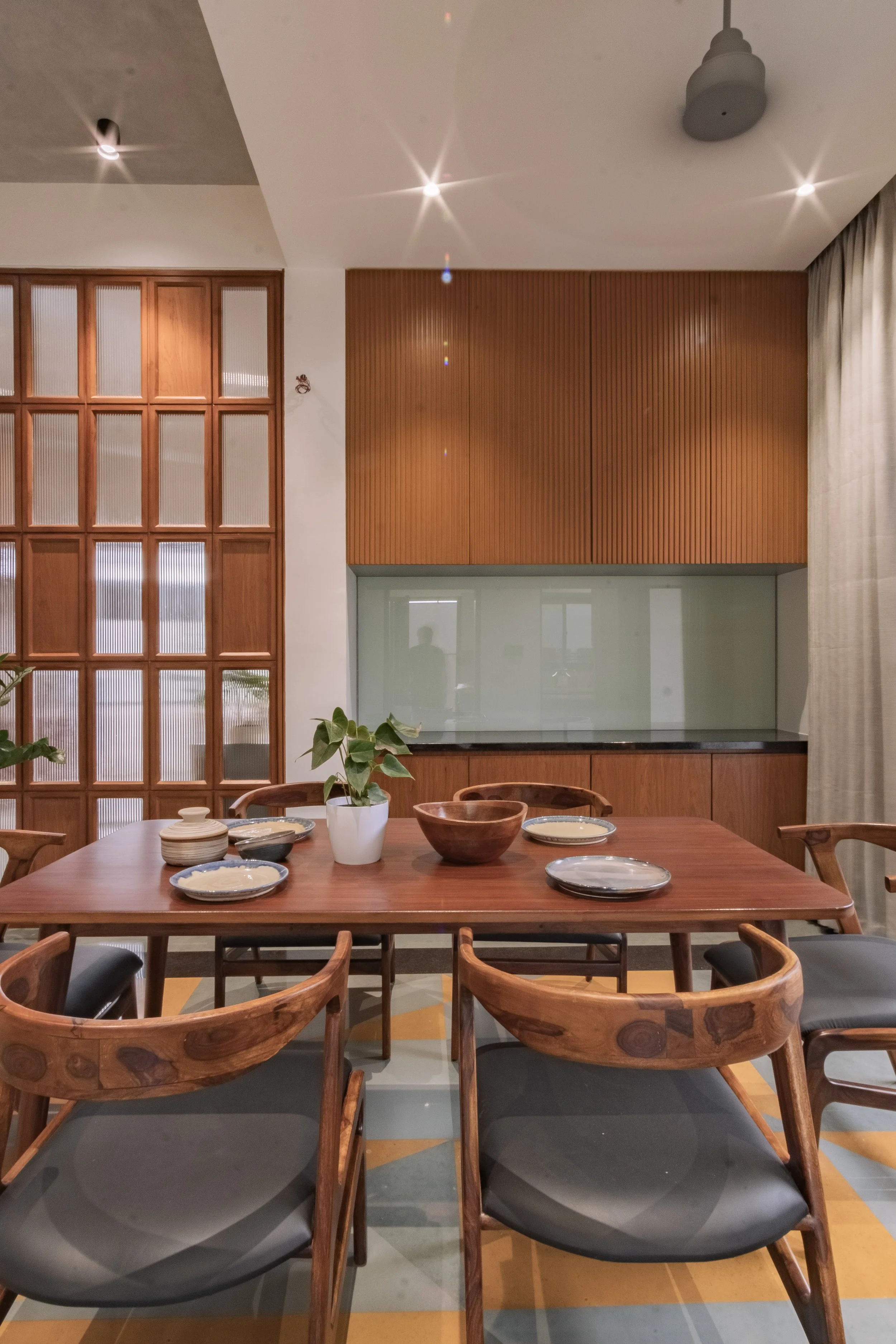
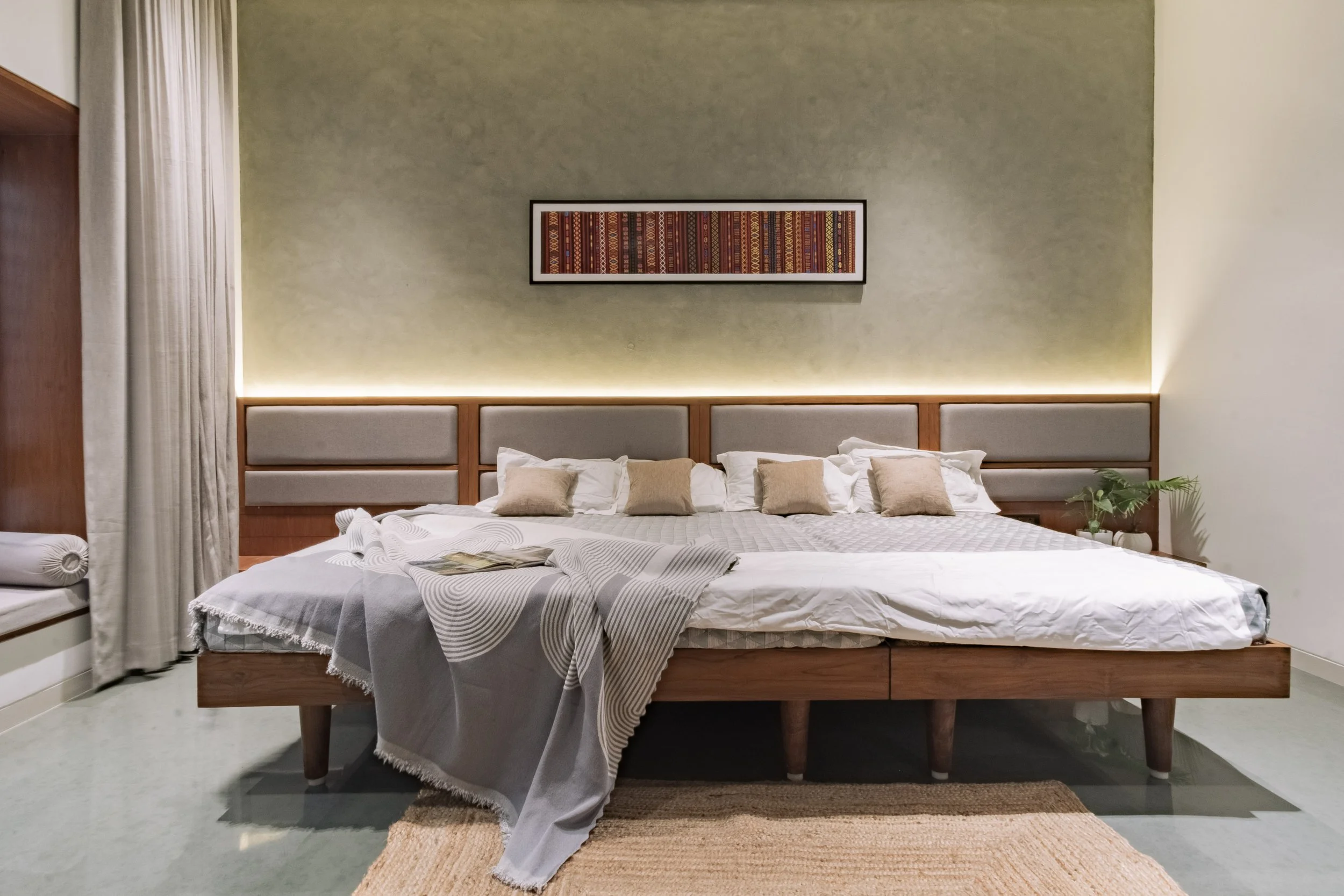
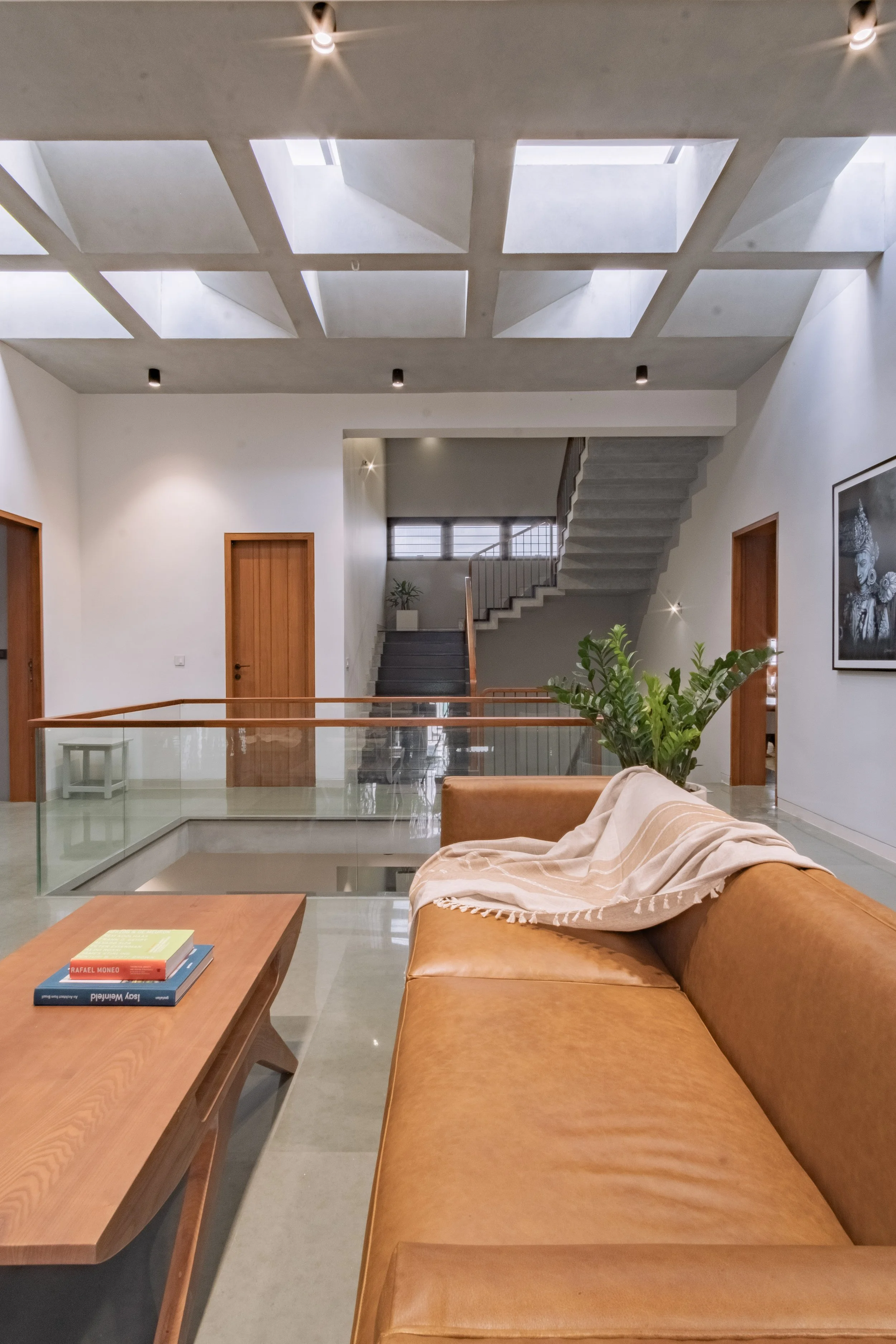
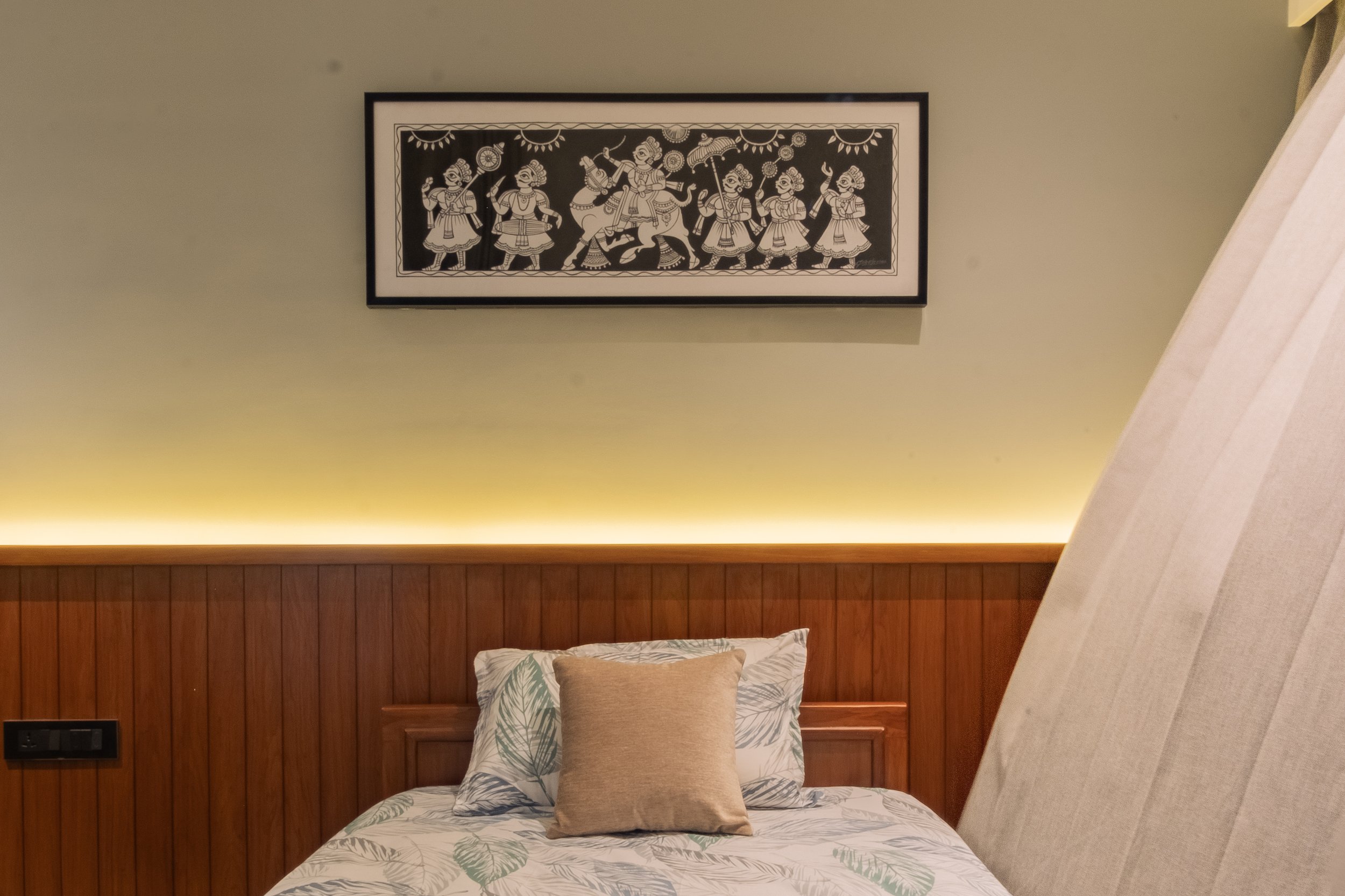
Materiality plays a crucial role in grounding the spatial experience. Kota stone was selected as the primary flooring material for its durability, thermal comfort, and understated elegance, while Jaisalmer stone inlays introduce moments of contrast and visual rhythm. Wood is used selectively to bring warmth into the interiors—through panelling, furniture, and teak and veneer finishes—softening the otherwise muted palette of stone and white walls. The intention was to strike a careful balance, allowing each material to retain its identity while contributing to a cohesive whole.
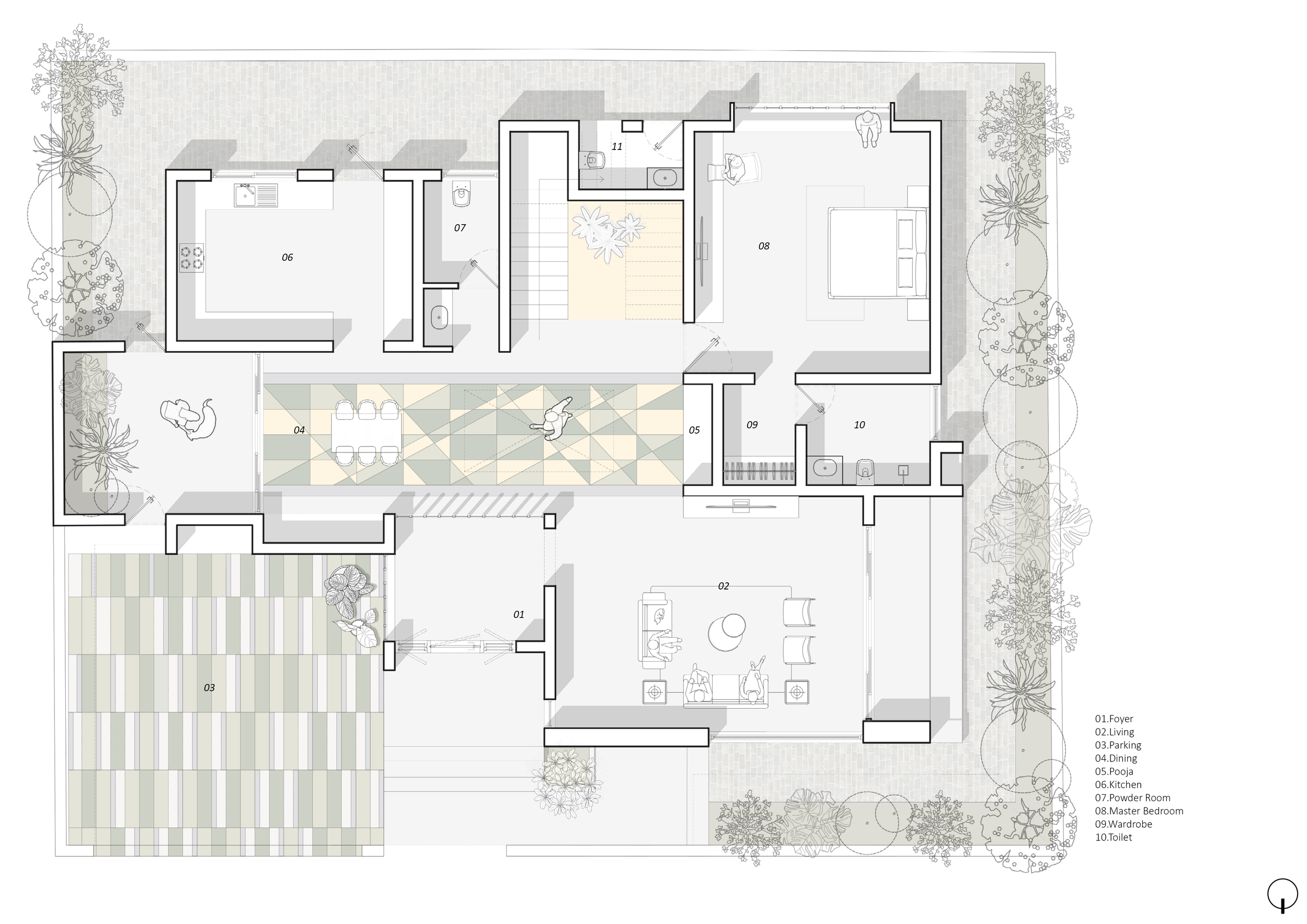
Ground floor plan
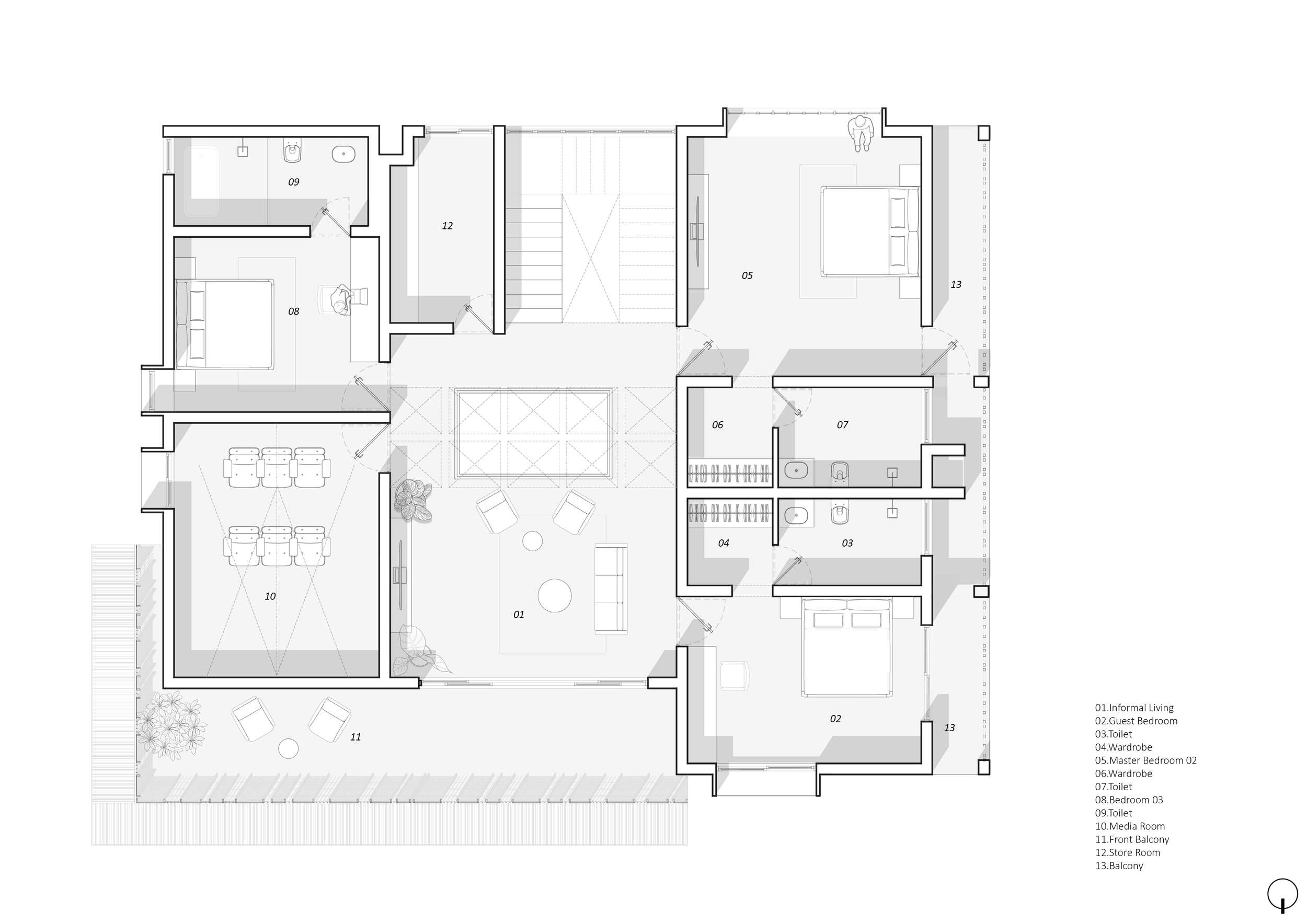
First floor Plan
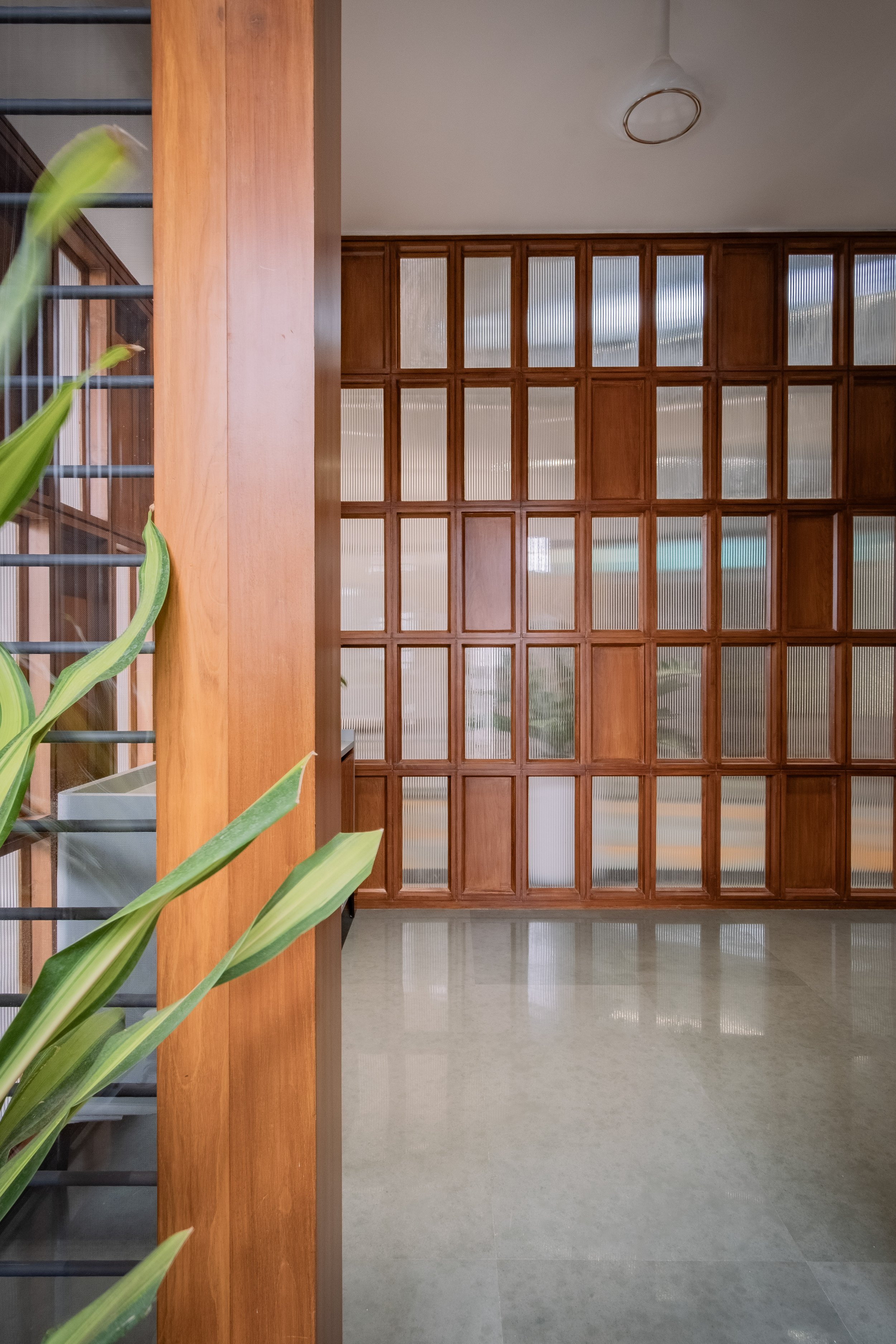
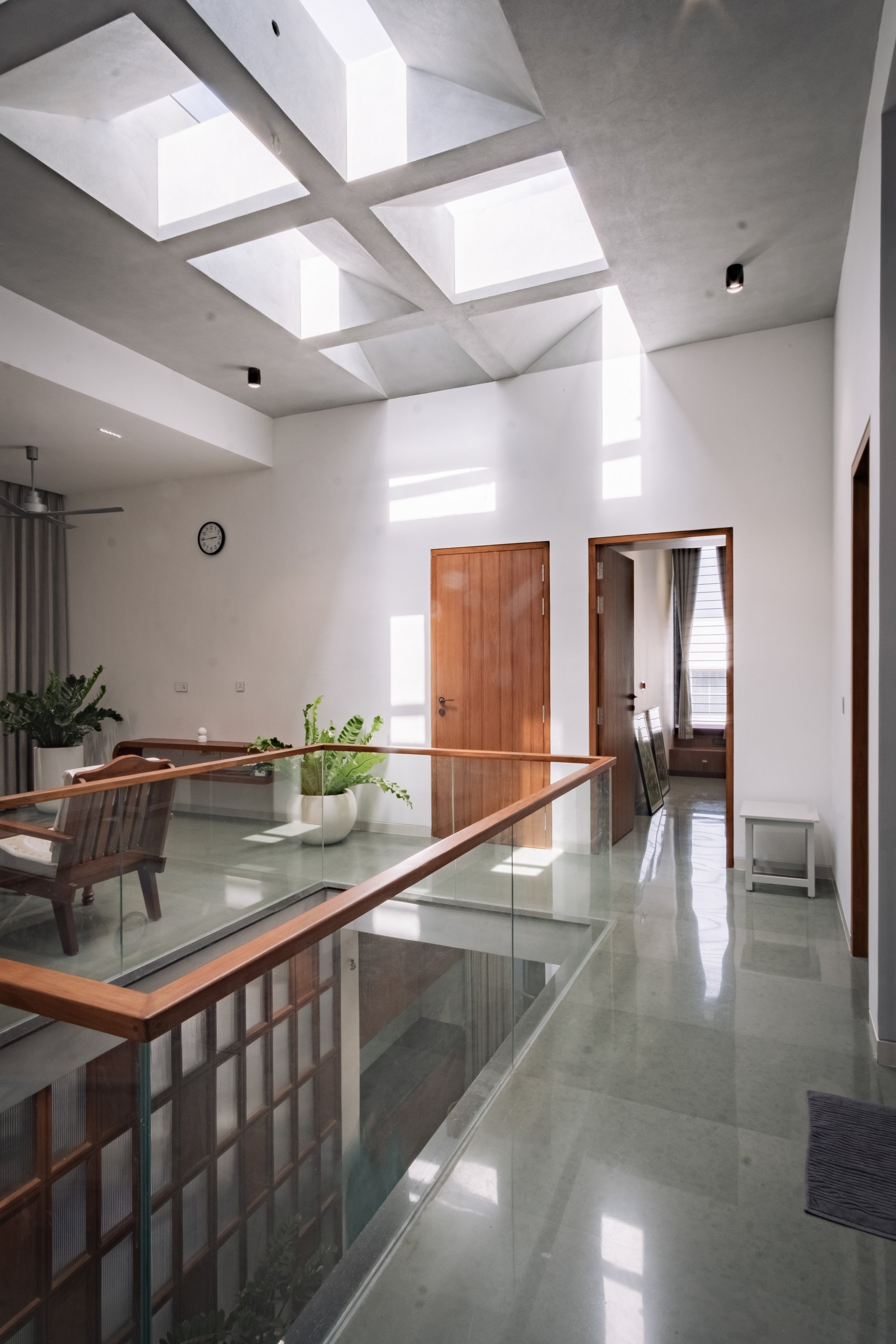
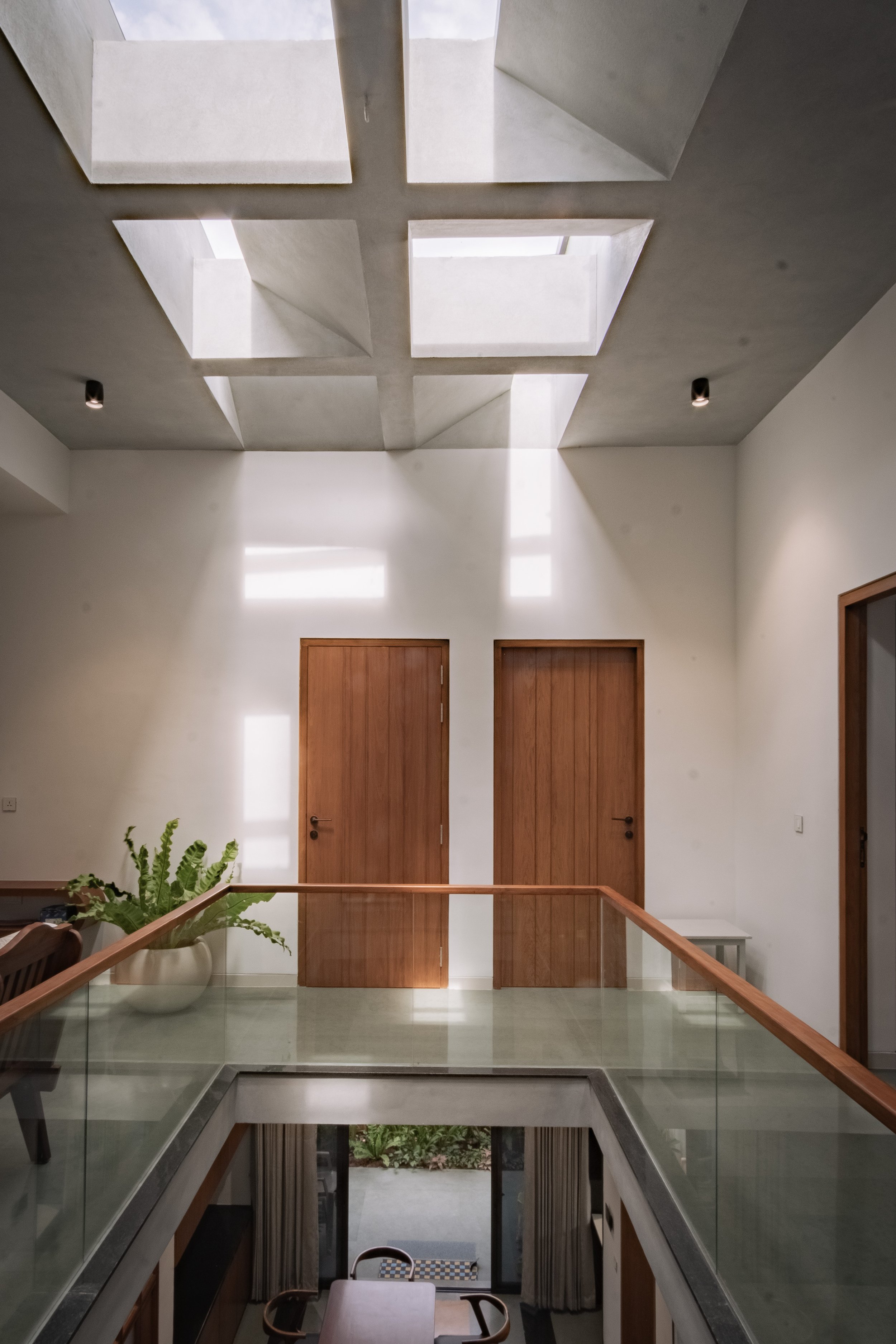
The concept of pattern extends beyond surfaces into spatial organization. Slatted partitions, ceiling apertures, and floor inlays are thoughtfully composed to establish a rhythmic continuity throughout the house. Spatial planning further reinforces this idea, creating a seamless connection between built form and nature. A landscaped periphery introduces greenery into the heart of the home, while skylights draw in soft, diffused daylight—reducing reliance on artificial lighting and fostering a calm, open atmosphere.
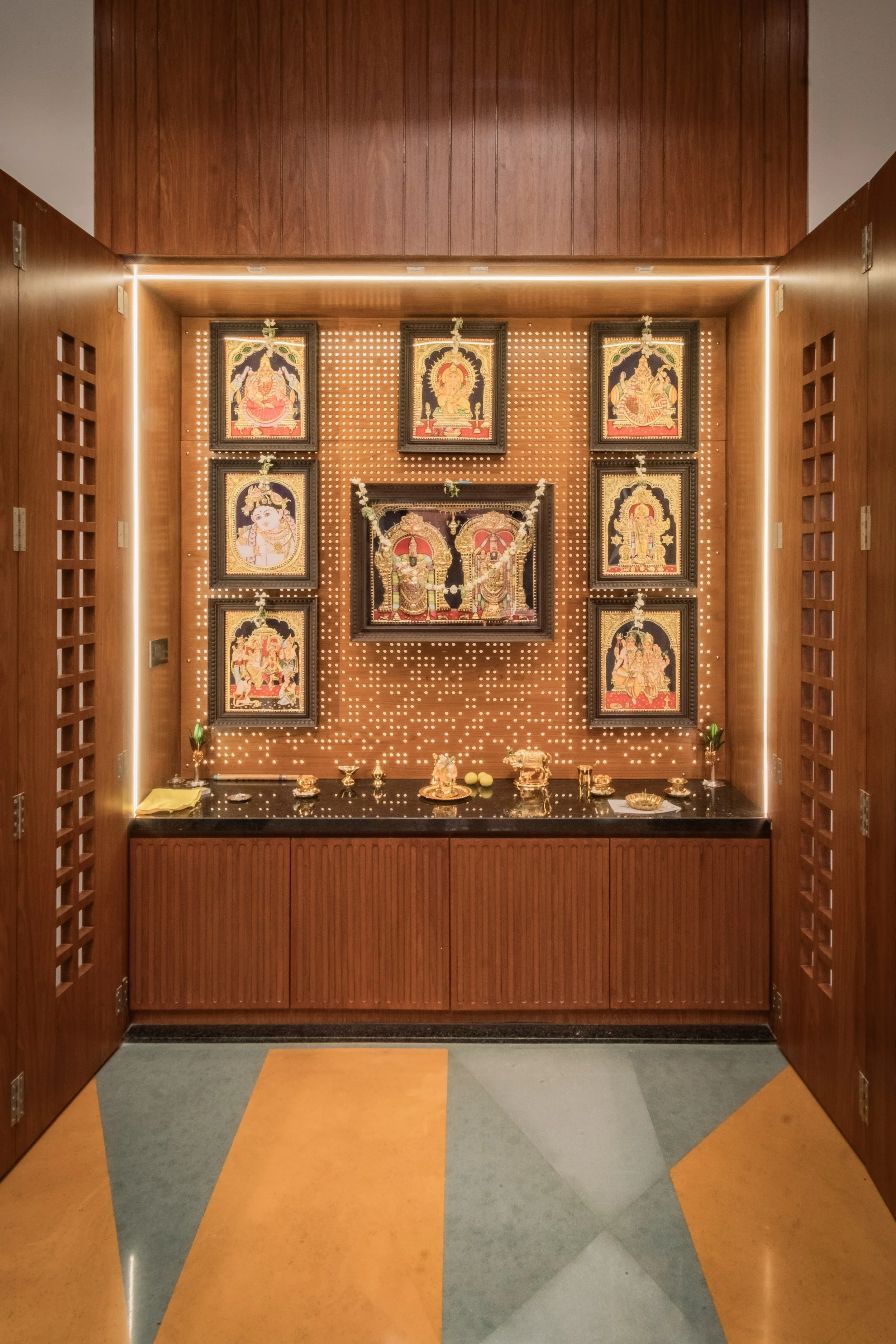
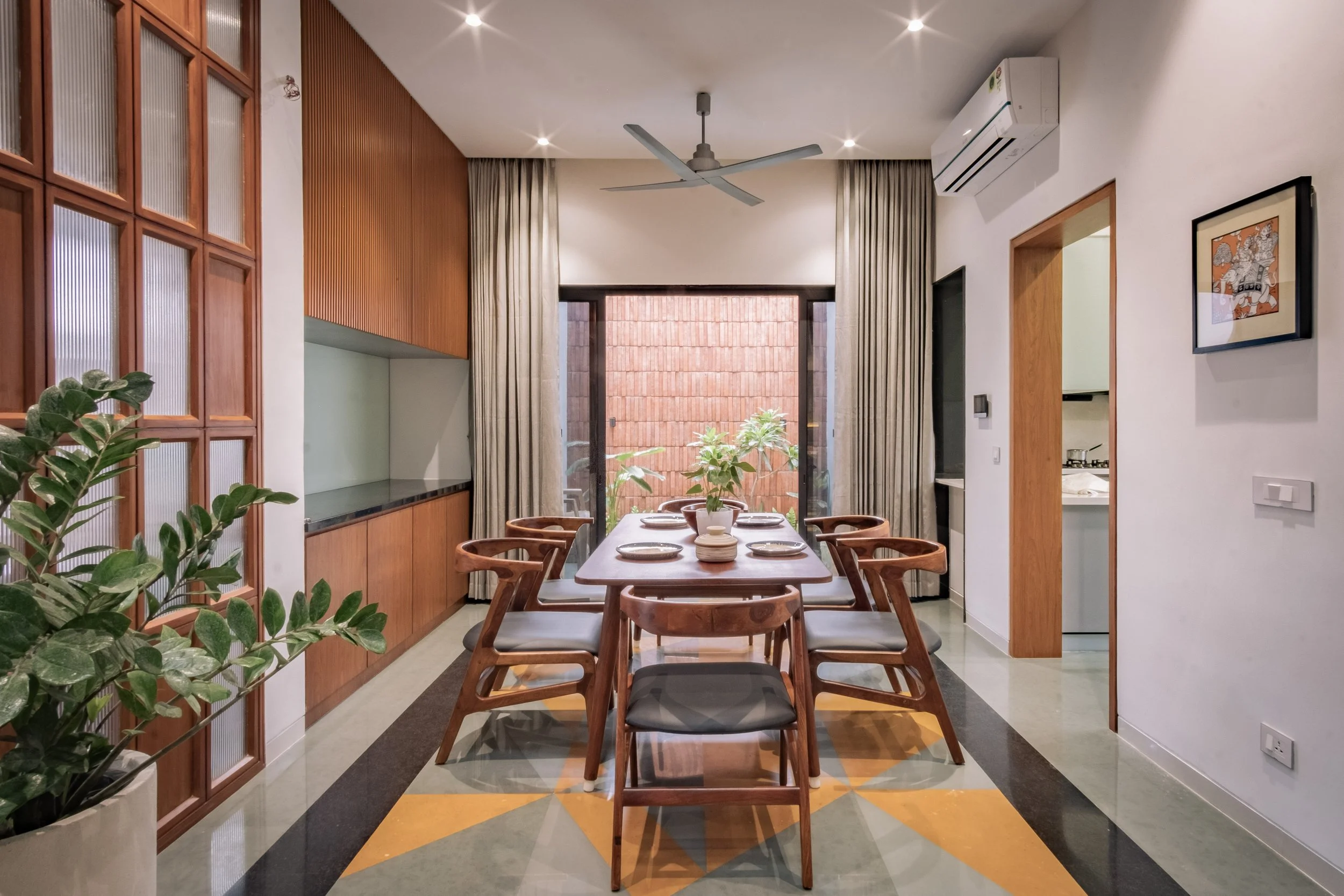
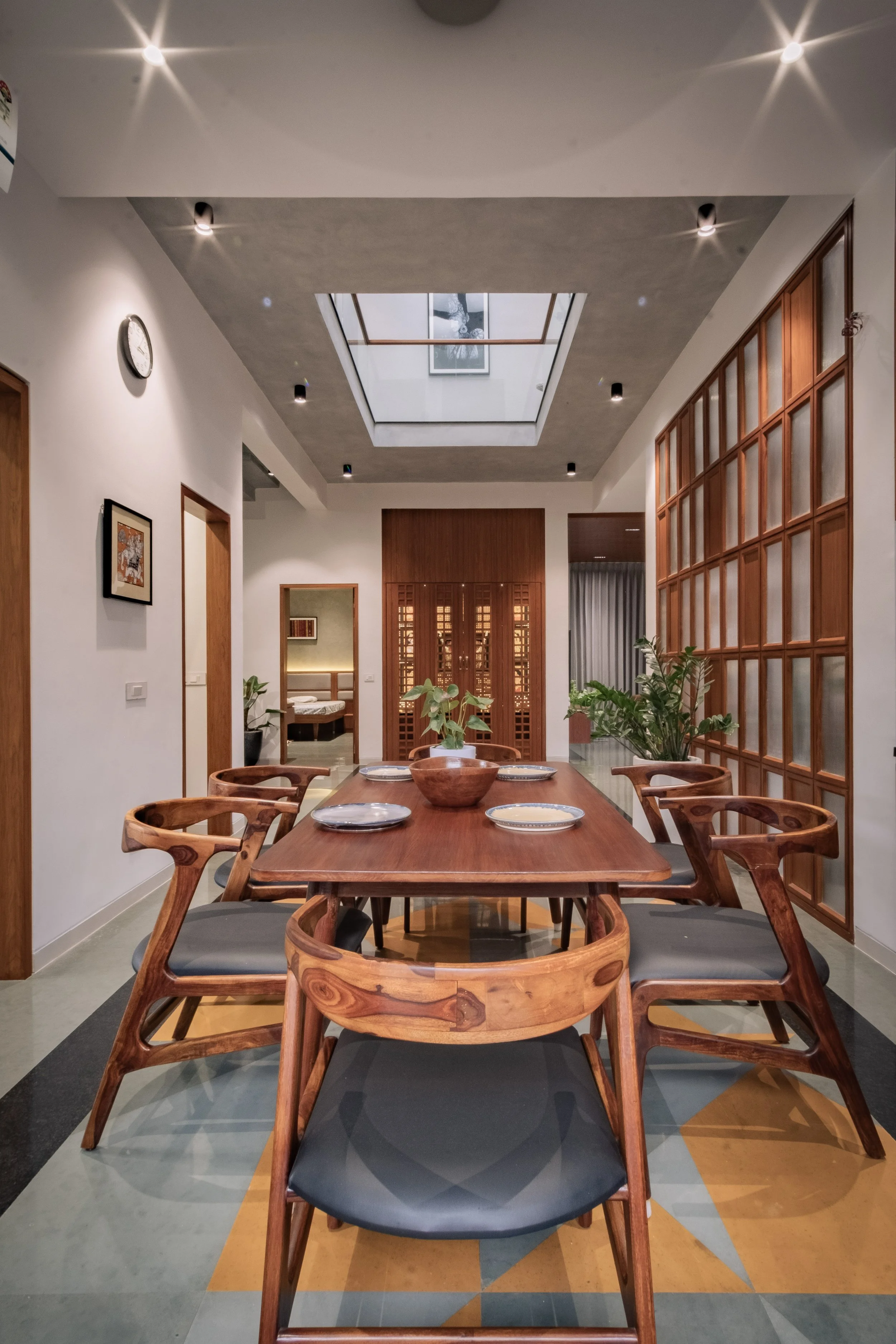
puja space, wrapped in warm wood, offers a quiet introspective retreat. The dining area, illuminated from above, becomes a luminous gathering space. Bedrooms, shielded by terracotta screens, receive filtered light that enhances comfort and privacy, while the media room provides a more enclosed, immersive environment.
Underlying the entire design process was a collaborative and forward-thinking client—enthusiastic and deeply supportive of the architectural vision. This alignment allowed the project to move beyond convention.